Skip to content
Uro-oncology · Robotic surgery · São PauloIn-person and telemedicine · WhatsApp (11) 99590-1506 · Tel. (11) 2769-3929
Male pelvic rehabilitation · Evidence-based

Pelvic Floor Physiotherapy After Prostatectomy in São Paulo

An integrated rehabilitation program for men who have had prostate cancer surgery. Regain urinary continence and sexual function with an individualized protocol, led by a urologic oncologist and a pelvic floor physiotherapist dedicated exclusively to male post-operative urological care.

✓ Dr. Bruno Benigno — CRM-SP 126265 / RQE 60022 ✓ Dr. Dalila Duarte — CREFITO 214722-F
21 studies included in a meta-analysis on post-prostatectomy PFMT (2022)
13 rehabilitation strategies compared in a network meta-analysis (2025)
AUA · EAU international guidelines recommending PFMT after prostatectomy
SP Clínica Uro Onco · Vila Mariana · in-person and telemedicine consultations
Most common symptoms after surgery

What you may be experiencing after prostatectomy

Removing the prostate disrupts the anatomy of the pelvic floor and the urinary sphincter. Specialized pelvic floor physiotherapy targets precisely these mechanisms.

1

Stress urinary leakage

Leaks when coughing, sneezing, lifting weights or changing position. This is the most frequent symptom and the one that responds best to supervised pelvic floor training.

2

Urgency and frequency

A sudden urge to urinate, with or without leakage, associated with detrusor overactivity in the early post-operative period.

3

Difficulty with erections and orgasm

Erectile dysfunction, reduced orgasm and climacturia (urine leakage during orgasm) respond well to pelvic rehabilitation combined with penile rehabilitation.

4

Perineal pain and discomfort

Pain when sitting, muscle tension and a feeling of “heaviness” in the perineum. Myofascial release and postural re-education are part of the protocol.

5

Dependence on pads

Prolonged use of protection affects self-esteem, social life and return to work. The goal is progressive: reduce pads down to zero.

6

Insecurity and isolation

Fear of leaks limits physical activity, travel and intimacy. Structured rehabilitation restores predictability and confidence.

Scientific basis

What meta-analyses show about pelvic floor physiotherapy after prostatectomy

We don't use slogans. We use evidence. Below are the most robust findings from the international literature of the last 5 years.

Meta-analysis · Urology · 2022

Pelvic floor muscle training triples the chance of continence

A systematic review of 21 studies showed that patients who undergo PFMT are almost 3 times more likely to regain continence after radical prostatectomy than those who do no pelvic exercise.

OR 2.97 (95% CI 1.28–6.91) for recovery of continence with PFMT vs. no treatment.

Park JJ et al. Efficacy of Pelvic Floor Exercise for Post-prostatectomy Incontinence: Systematic Review and Meta-analysis. Urology, 2022. DOI

Meta-analysis · Clinics (SP, Brazil) · 2025

Electromyographic biofeedback increases the chance of continence by 78%

A Brazilian systematic review of 16 articles and 7 randomized clinical trials concluded that EMG biofeedback combined with PFMT speeds up recovery of continence and reduces pad weight.

RR 1.78 (95% CI 1.29–2.45) for the chance of continence with EMG biofeedback.

Novais CCS et al. The impact of using electromyographic biofeedback on pelvic floor rehabilitation in men with post-prostatectomy urinary incontinence: a meta-analysis. Clinics (São Paulo), 2025. DOI

Network meta-analysis · Int J Surg · 2025

A multimodal protocol is the most effective

A statistical comparison of 13 rehabilitation strategies showed that combining PFMT + biofeedback + electrical stimulation produces the greatest objective reduction in pad weight and the greatest improvement in urinary quality of life (ICIQ-UI-SF).

24-hour pad reduction: WMD –134.41 g (95% CI –187.80 to –81.02). SUCRA ranking: 93.1% for the triple protocol.

Zhao L et al. Comparative efficacy of multimodal physical therapies for urinary incontinence after radical prostatectomy: a systematic review and network meta-analysis. Int J Surg, 2025. DOI

Meta-analysis · Neurourol Urodyn · 2025

Physiotherapy started before surgery makes a difference at 3 months

A recent meta-analysis showed that preoperative PFMT significantly improves recovery of continence at 3 months after surgery — a critical window for returning to social and professional activities.

OR 1.52 (95% CI 1.05–2.20; p = 0.03) for continence at 3 months in patients who started PFMT before surgery.

Terzoni S et al. Preoperative Pelvic Muscle Training for Continence Recovery After Prostatectomy: Yet Another Meta-Analysis? Neurourol Urodyn, 2025. DOI

Meta-analysis · Int J Clin Pract · 2021

Supervision reduces urine leakage by up to 7 times in the first month

A cumulative analysis of 26 articles demonstrated that guided programs (with biofeedback and/or electrical stimulation) speed up objective recovery — measured by 24-hour pad weight — in the first three months after surgery.

Recovery of continence at 3 months: PFME alone 40% · Biofeedback 49% · Electrical stimulation 57% · Biofeedback + Electrical stimulation 75%.

Sciarra A et al. A biofeedback-guided programme or pelvic floor muscle electric stimulation can improve early recovery of urinary continence after radical prostatectomy. Int J Clin Pract, 2021. DOI

Randomized clinical trial · Support Care Cancer · 2025

The combination “PFMT + Knack maneuver + lifestyle” is superior

A randomized study of 71 patients showed that combining classic PFMT with the Knack maneuver (pelvic contraction before exertion) and lifestyle guidance (fluid intake, weight control, reduction of bladder irritants) produces the best outcome at 8 weeks.

Significant improvement in all primary and secondary outcomes (p < 0.001) in favor of the combined protocol.

Gerlegiz ENA et al. Lifestyle recommendations and pelvic floor muscle training with Knack maneuver for post-prostatectomy urinary incontinence: a randomized controlled trial. Support Care Cancer, 2025. DOI

Full references on PubMed. International guidelines from the American Urological Association (AUA) and the European Association of Urology (EAU) recommend pelvic floor muscle training as first-line therapy for post-prostatectomy urinary incontinence.

Responsible team

Two specialties. One goal: your rehabilitation.

What sets Clínica Uro Onco apart is the real integration between the urologist who operated (or will operate) on you and a dedicated pelvic floor physiotherapist. Cross-evaluations, an aligned protocol and shared clinical decisions.

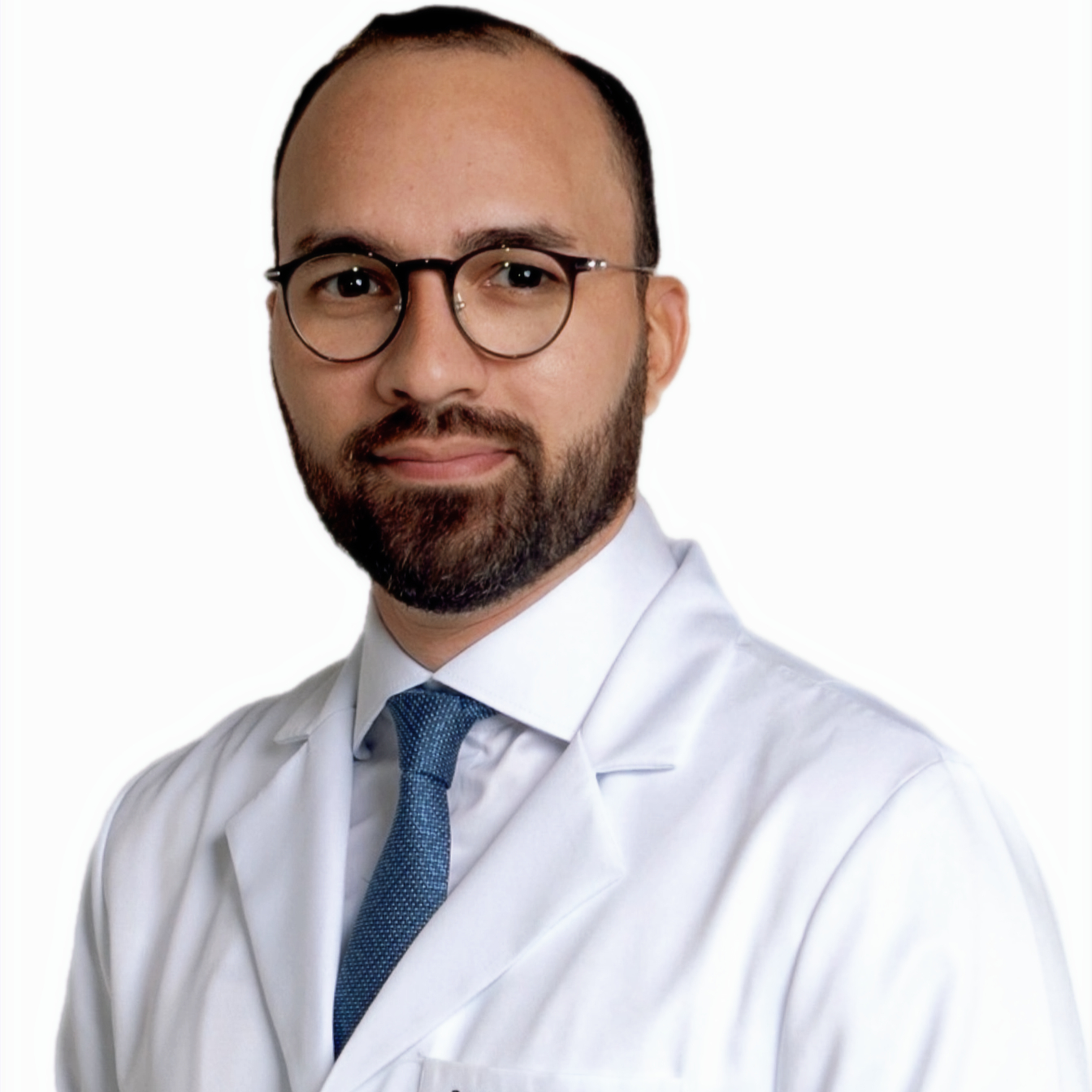
Dr. Bruno Benigno
Urologic Oncologist

Dr. Bruno Benigno

CRM-SP 126265 · RQE 60022 · SBU Board Certification

Urologist subspecialized in uro-oncology and robotic surgery. He leads surgical planning, urinary sphincter assessment and penile rehabilitation, and decides the ideal timing for each stage of pelvic floor physiotherapy together with Dr. Dalila.

DD Dr. Dalila Gonçalves Duarte
Pelvic Floor Physiotherapist — Male Urological Rehabilitation

Dr. Dalila Gonçalves Duarte

CREFITO 214722-F · Practice dedicated exclusively to pelvic health

Physiotherapist specializing in male pelvic rehabilitation after urological surgery. She performs a detailed functional assessment, supervised exercises, electromyographic biofeedback, electrical stimulation and individualized postural re-education, with a protocol adapted to each post-surgical phase.

Video Content

Deepen your knowledge

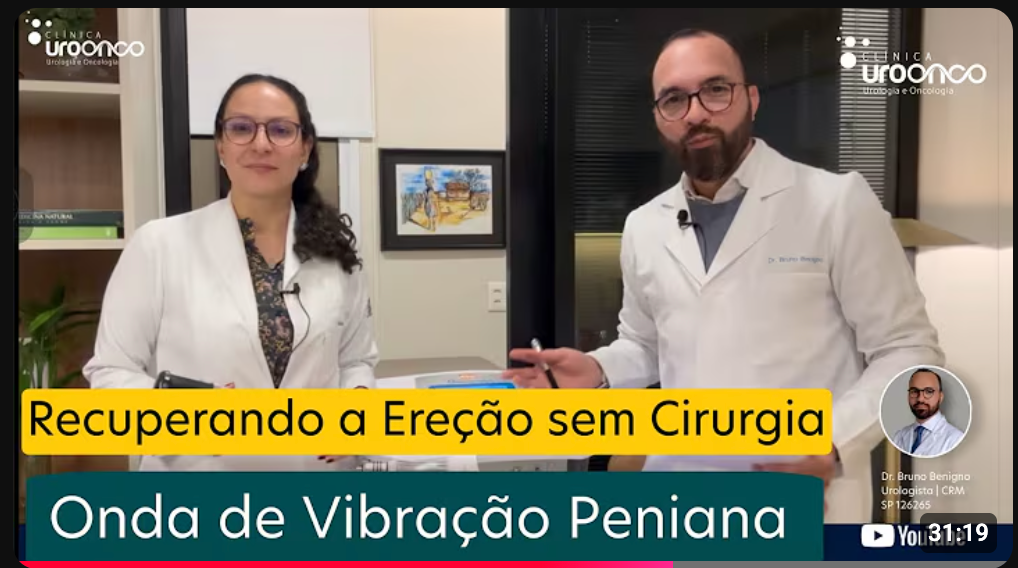
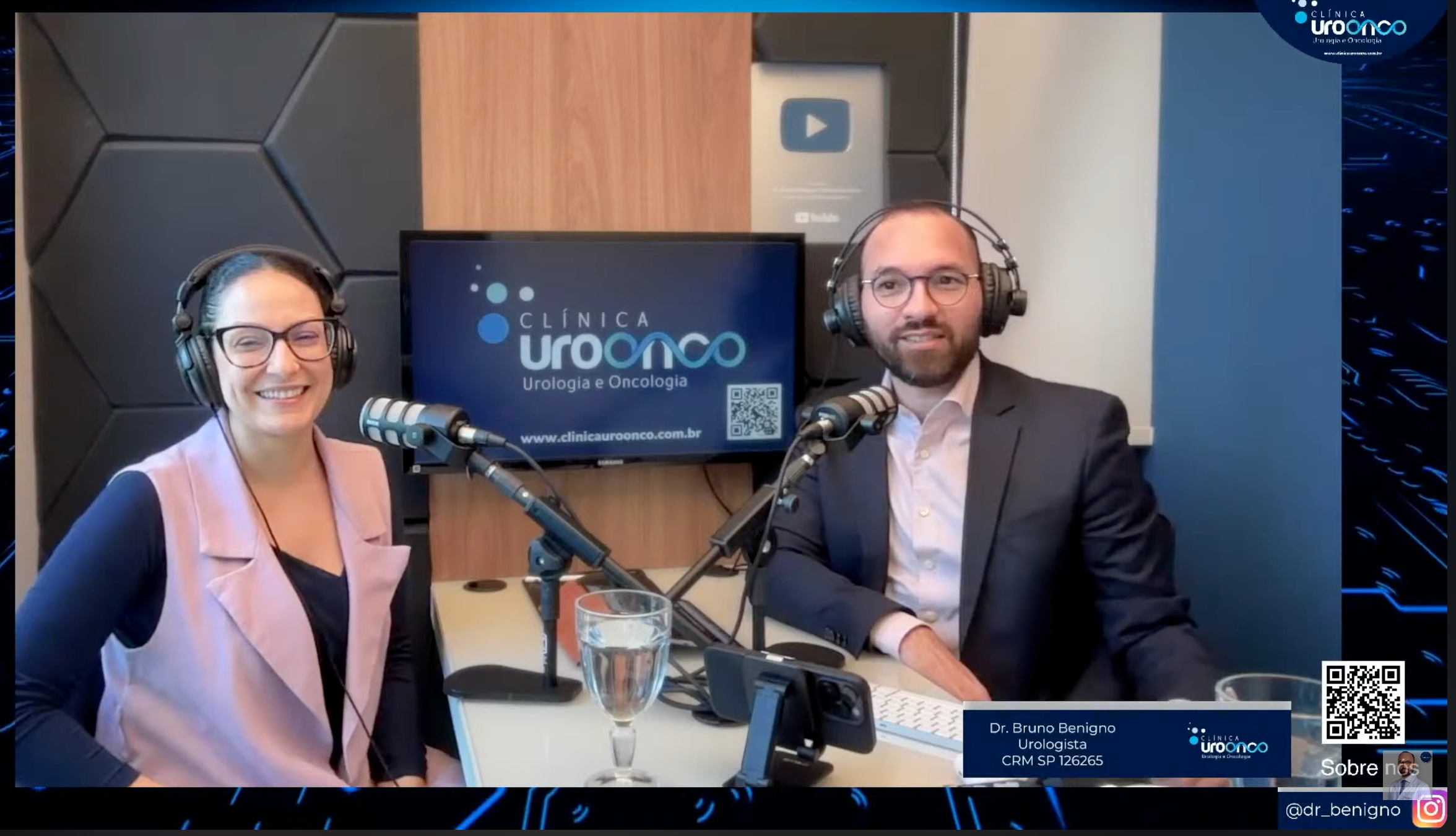
Watch our team's explanatory videos to better understand clinical management and pelvic rehabilitation after prostatectomy.

Our protocol

The 5 phases of pelvic rehabilitation after prostatectomy

Each phase has clinical objectives, functional goals and progression criteria defined by consensus between the urologist and the physiotherapist.

1
Preoperative

Preparation & pelvic awareness

  • Functional assessment of the pelvic floor
  • Teaching the correct contraction
  • Knack maneuver
  • Guidance on expectations
2
Immediate post-op

Catheter removal + reactivation

  • Early supervised start
  • Gentle isometric reactivation
  • Management of urgency
  • Fluid and dietary guidance
3
Weeks 2 to 6

Strengthening & biofeedback

  • Progressive PFMT
  • Electromyographic biofeedback
  • Electrical stimulation when indicated
  • Bladder diary
4
2 to 3 months

Functional integration

  • Contraction during movement
  • Return to physical activity
  • Integrated penile rehabilitation
  • Weaning off pads
5
3 to 6 months

Consolidation & discharge

  • Independent maintenance
  • Reassessment with Dr. Bruno
  • Full sexual and social life
  • Discharge from physiotherapy
Why Clínica Uro Onco

What sets us apart from stand-alone physiotherapy clinics

We are the only practice in São Paulo that brings together, at the same address, urologic oncology and male pelvic floor physiotherapy dedicated exclusively to recovery after prostatectomy.

✓

Joint assessment

The urologist and the physiotherapist discuss your case together. Nothing gets lost between the doctor's office and the physiotherapy room.

✓

Evidence-based protocol

We follow the best practices from the AUA, the EAU and recent meta-analyses — not a generic protocol copied from women's health clinics.

✓

Integrated penile rehabilitation

Continence and sexual function are addressed in parallel, with specialized guidance on erectile dysfunction after prostatectomy.

✓

Preoperative care starts earlier

If you have not had surgery yet, we start physiotherapy before the operation. This is the window with the greatest statistical impact on continence at 3 months.

✓

Biofeedback + electrical stimulation

Calibrated equipment and individualized protocols, not applied on an assembly-line basis. Each patient receives the resource from which he benefits most.

✓

We treat patients from any surgery

Operated on by another urologist? No problem. Pelvic floor physiotherapy at Clínica Uro Onco welcomes patients from any provider.

“What struck me most was not the technique itself — it was the feeling that everyone was speaking the same language. Dr. Bruno knew exactly what the physiotherapist was doing. By 3 months after surgery I was no longer using pads. It was the best investment I made in my recovery.”
JR
J.R., age 62 Robotic radical prostatectomy · Continent at 12 weeks
Frequently asked questions

Frequently asked questions about pelvic floor physiotherapy after prostatectomy

The answers below were prepared by the Clínica Uro Onco team based on international guidelines (AUA / EAU) and recent meta-analyses.

When should I start pelvic floor physiotherapy after prostate surgery?

Ideally, pelvic floor physiotherapy begins before surgery (preoperative phase), continues right after the urinary catheter is removed and extends for 3 to 6 months after surgery.

Evidence from meta-analyses published in 2021 and 2025 shows that starting pelvic floor muscle training before surgery significantly increases the chances of regaining urinary continence in the first 3 months.

Terzoni S et al. Neurourol Urodyn, 2025 · DOI
Does pelvic floor physiotherapy really work for incontinence after prostatectomy?

Yes — and the evidence is high-level. A 2022 meta-analysis of 21 studies showed that pelvic floor muscle training (PFMT) increases the chance of regaining urinary continence after radical prostatectomy by almost 3 times (OR 2.97; 95% CI 1.28–6.91).

When combined with electromyographic biofeedback or electrical stimulation, the results are even better: RR 1.78 (95% CI 1.29–2.45) for the chance of continence, according to a 2025 Brazilian meta-analysis.

Park JJ et al. Urology, 2022 · DOI | Novais CCS et al. Clinics (SP), 2025 · DOI
Which technique is best: Kegel exercises alone, biofeedback or electrical stimulation?

The most recent evidence (a network meta-analysis published in 2025 in the International Journal of Surgery) shows that the combination of PFMT + biofeedback + electrical stimulation produces the greatest reduction in pad weight (–134 g per 24 h; 95% CI –187.80 to –81.02) and the greatest improvement in quality of life (ICIQ-UI-SF).

Electrical stimulation + biofeedback ranks first for recovery of continence (SUCRA 89.9%). That is why we work with an individualized multimodal protocol — not a single technique applied to every patient.

Zhao L et al. Int J Surg, 2025 · DOI
How many pelvic floor physiotherapy sessions are needed?

The number of sessions varies according to the severity of incontinence, neuromuscular response and functional goals.

On average, the complete protocol involves 8 to 16 supervised sessions over 3 to 6 months, combined with daily home exercises. The initial assessment with Dr. Dalila defines the individualized plan, including weekly frequency, resources (biofeedback, electrical stimulation) and discharge criteria.

Does pelvic floor physiotherapy also help with sexual function and erections after surgery?

Yes. Recent studies show that pelvic floor muscle training contributes to:

· improved erectile rigidity, especially when integrated into a multimodal sexual rehabilitation program;
· reduced climacturia (urine leakage during orgasm);
· better ejaculatory control and perception of orgasm.

At Clínica Uro Onco, penile rehabilitation is led by Dr. Bruno Benigno in parallel with Dr. Dalila's pelvic program, with adjuvant medication when indicated.

Do you treat patients who had surgery at other hospitals or with other urologists?

Yes. Post-prostatectomy pelvic floor physiotherapy at Clínica Uro Onco welcomes both patients operated on by Dr. Bruno Benigno and patients who had surgery elsewhere.

Simply book an initial assessment and bring your pathology report and surgical details (date, approach — open, laparoscopic or robotic — and technique used, if known).

Where is the clinic and how do I book?

Clínica Uro Onco is located at Rua Borges Lagoa, 1070, Conjunto 131, Cobertura — Vila Clementino, São Paulo/SP, near Santa Cruz metro station, with easy parking nearby.

You can book a post-prostatectomy pelvic floor physiotherapy assessment:
· via WhatsApp: (11) 99590-1506
· by phone: (11) 2769-3929

Take the next step in your recovery now

Book your assessment via WhatsApp. Within one business day we will get back to you with available times and let you know which documents to bring to your first appointment.

Book an assessment now · (11) 99590-1506

In-person care in Vila Mariana · Telemedicine available for the initial assessment · Support for patients from all over Brazil

Medical content reviewed by Dr. Bruno Benigno, urologist and uro-oncologist (CRM-SP 126.265 · RQE 60022), based on AUA, EAU and NCCN guidelines. Last reviewed:

Book