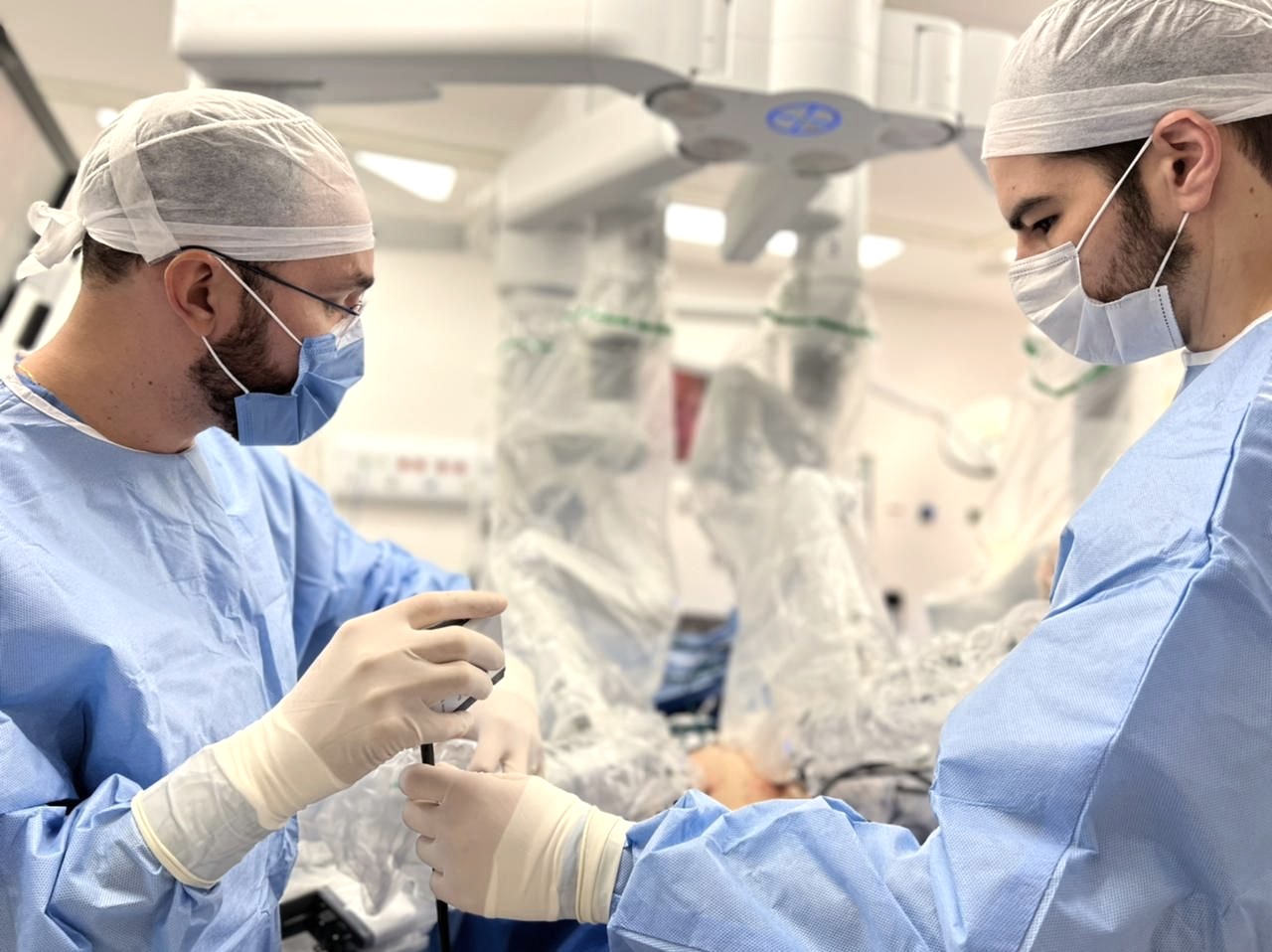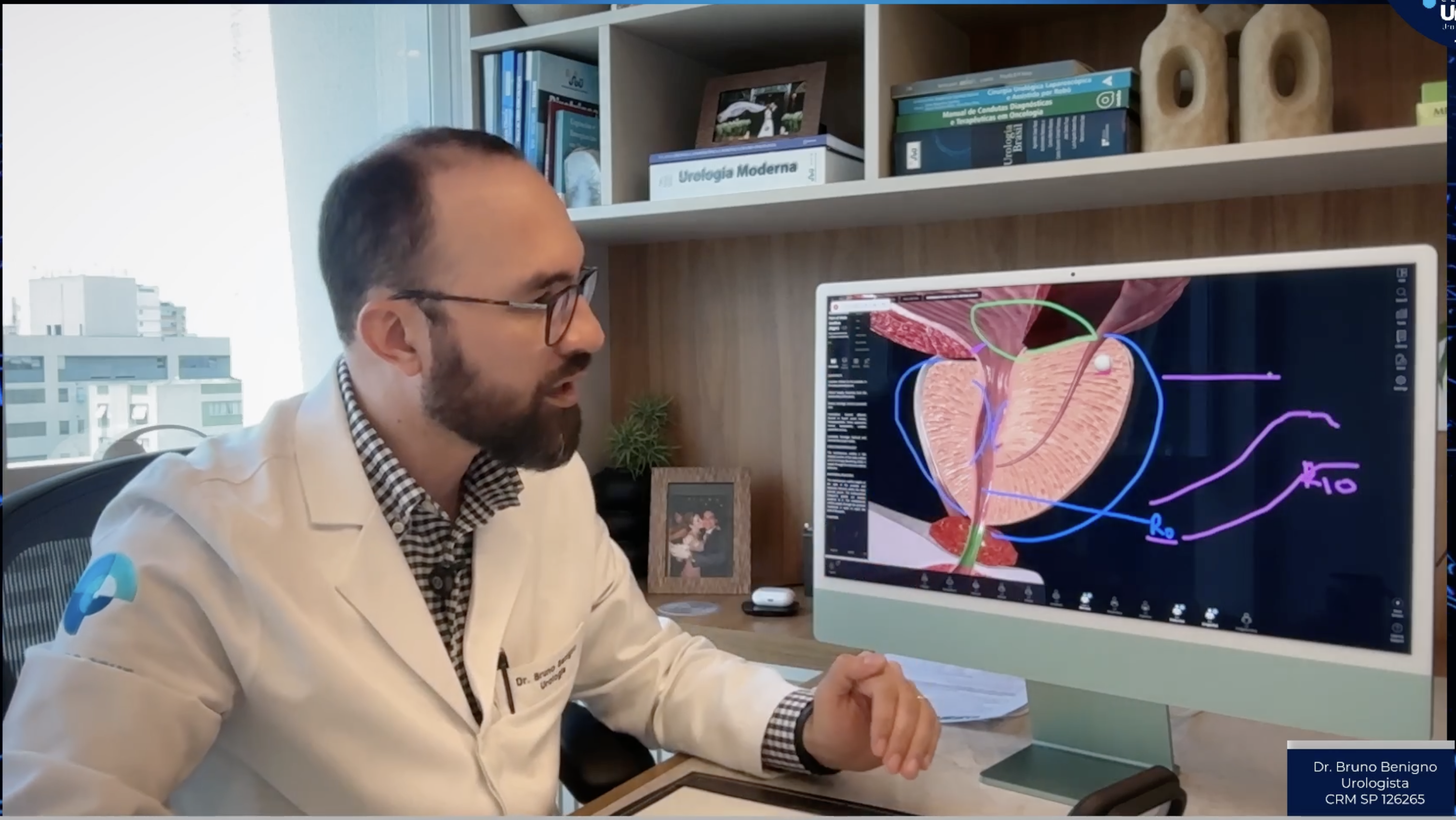
If your doctor has recommended a prostate biopsy in São Paulo and you are looking for information before scheduling, this guide was designed to clarify each step of the process. Dr. Bruno Benigno, a urologic oncologist specialized in uro-oncology and robotic surgery, performs the procedure at Clínica Uro Onco, in Vila Clementino, using the most advanced techniques available: transperineal biopsy with MRI image fusion.
When is a prostate biopsy indicated?
The decision is made by the urologist based on a set of clinical data. It is always individualized — not every elevated PSA leads to a biopsy. The most common situations include:
- Elevated or rising PSA — progressively increasing values on serial tests, regardless of the absolute value.
- MRI with PI-RADS 4 or 5 — suspicious lesion identified on imaging.
- Abnormal digital rectal exam — a nodule or focal hardening on physical examination.
- Family history — first-degree relatives with prostate cancer, combined with other risk factors.
- Repeat biopsy — patient with a previous negative biopsy and persistent clinical suspicion.
Types of prostate biopsy available in São Paulo
Transrectal Biopsy
Through the rectum, guided by ultrasound. The classic technique, most widely available.
Transperineal + MRI Fusion
Through the perineum, with no contact with the rectal mucosa. Combines MRI with real-time ultrasound.
Cognitive Fusion
Mental MRI/ultrasound correlation. An intermediate alternative; depends on the operator’s experience.
The EAU 2024 guidelines recommend MRI-guided biopsy as the preferred approach when a lesion is visible on MRI. Dr. Bruno Benigno performs the transperineal image-fusion technique at leading referral hospitals in São Paulo.
How to prepare for a prostate biopsy
Preparation varies according to the technique used and the institution’s protocol. In general, you will need:
What happens on the day of the prostate biopsy?
The procedure is performed in a hospital setting with full surgical infrastructure. With sedation combined with local anesthesia, the patient feels no pain during the procedure. It takes 30 to 45 minutes on average. The total time spent at the hospital is usually 2 to 3 hours.
- Slight bleeding in the urine or stool during the first 48–72 hours.
- Mild, temporary perineal discomfort.
- Relative rest on the day of the procedure.
How to interpret the biopsy result
The report is issued by the pathologist and assessed by the urologist. The main scenarios include:
Negative
No neoplastic cells in the samples. This does not completely rule out cancer in areas that were not sampled. Ongoing clinical follow-up is necessary.
Positive — ISUP Grade Group
Replaces the classic Gleason grading. It stratifies the risk of progression into five groups (I to V). The higher the group, the more aggressive the tumor and the more intensive the recommended treatment.
Benign findings
Prostatitis, high-grade PIN or ASAP require specific follow-up with the urologist. They are not cancer, but some of these conditions may indicate an increased risk.