
Robotic Partial Nephrectomy in São Paulo
A kidney tumor diagnosis almost always prompts the same question: “Will I lose my kidney?” In most cases, the answer is no. Treatment with maximum kidney preservation.
 View CV
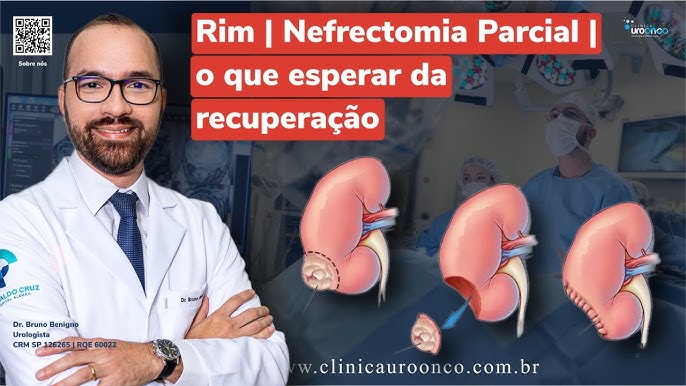
Dr. Bruno Benigno
- Urologic Oncologist
- Robotic Surgery Specialist
- CRM SP 126265 | RQE 60022
- 1,500+ Surgeries Performed
How Does Robotic Partial Nephrectomy Work?
Learn how the technology makes it possible to remove the tumor while preserving your kidney.
Why the Robotic Approach Makes a Difference
Partial nephrectomy is one of the most challenging operations in urology. The robotic platform changes that reality.
3D Vision and Precision
It allows the interface between the tumor and the healthy parenchyma to be identified with extreme precision, ensuring adequate safety margins during resection.
Greater ControlShorter Ischemia Time
Superior vision and articulated instruments shorten renal artery clamping time (below 20–25 min), a critical factor in saving kidney function.
Kidney PreservationFaster Recovery
Performed through 4 to 5 incisions of 8 mm. This means less blood loss, less postoperative pain and a typical hospital stay of only 1 to 2 days.
Minimally InvasiveCardiovascular Protection
Preserving kidney function reduces long-term cardiovascular risk and the chance of developing severe chronic kidney disease in the future.
Overall SurvivalFiltered Movements
The technology filters out the micro-tremors of the human hand and scales down movement, making the reconstruction (suturing) of the tumor bed flawless.
SafetyGold Standard
For localized tumors (T1a and T1b), AUA and EAU guidelines recommend partial nephrectomy as the undisputed treatment of choice.
International ProtocolThe Surgical Journey
Robotic Partial Nephrectomy, step by step.
Access and Exposure
The patient is positioned and small incisions are made for the trocars. The retroperitoneum is dissected to expose the kidney and isolate the renal artery for safety control.
Temporary Ischemia
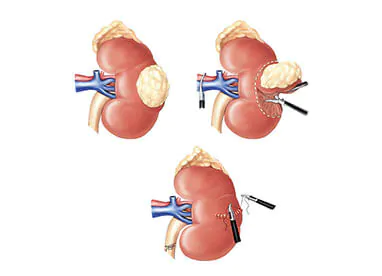
The renal artery is temporarily occluded (clamped) to reduce bleeding while the kidney is cut. The time is strictly monitored.
Tumor Resection
Guided by the high-definition 3D camera, the tumor is dissected and removed with a margin of surrounding healthy tissue to ensure oncological safety.
Tumor Bed Reconstruction
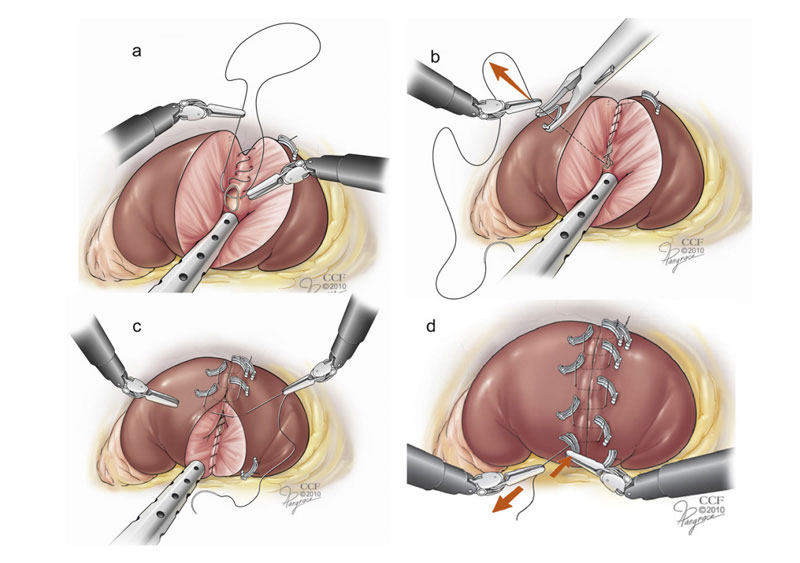
The “hole” left in the kidney is carefully sutured in layers with absorbable sutures using the robotic arms. This is a critical step to prevent postoperative bleeding.
Recovery
The artery is released and blood flow returns. After a 1–2 day hospital stay, the patient goes home. Return to light activities in about 2 weeks.
Technology and Facilities
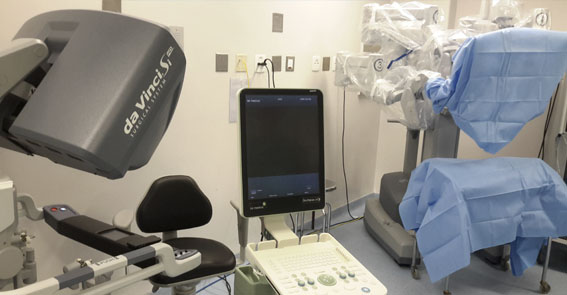
Care at the leading centers of excellence in São Paulo.
Patient Reviews
What patients treated at Clínica Uro Onco say.
“Finding a nodule on my kidney was frightening. Dr. Bruno reassured me from the very first consultation. The robotic surgery was a success: he was able to remove only the tumor and save my kidney. The next day I was already walking around my room.”
Review via Doctoralia
“An extremely caring and highly skilled doctor. He explained in detail, with a drawing, how the partial nephrectomy would be done. The clinic team is very attentive with the insurance paperwork. I recommend him without hesitation.”
Review via Google
“I had only one functioning kidney, and it had a tumor. Dr. Bruno saved my quality of life by performing robotic surgery and sparing me from needing hemodialysis. I will be forever grateful for his expertise.”
Review via Doctoralia
Frequently Asked Questions
Frequently asked questions about Partial Nephrectomy in São Paulo
Not necessarily. Lesions smaller than 2 cm in elderly patients or in those with significant comorbidities may be candidates for active surveillance with serial imaging. The decision is strictly individualized and discussed during the consultation.
In experienced hands and with robotic surgery, keeping ischemia time under 25 minutes, functional loss is minimal. The volume of healthy parenchyma preserved is the main determinant of postoperative function.
Partial nephrectomy is included in the list of procedures that health insurance plans in Brazil are required to cover (ANS). Coverage of the specific robotic equipment fee (instruments) varies according to your plan's policy. Our administrative team guides and assists you throughout the authorization process.
On average, the hospital stay is only 1 to 2 days with the minimally invasive robotic approach, compared with the 3 to 5 days that conventional open surgery would require.
No. About 20% of the kidney masses removed are benign (such as angiomyolipoma, oncocytoma or complex cyst). The definitive, 100% accurate diagnosis is histopathological, meaning it is obtained after surgery through the pathologist's analysis.
Reference Hospitals in São Paulo
Ready to book your consultation?
Bring your scans (CT or MRI) for a detailed review and to define the best strategy to preserve your kidney.
Care in São Paulo (city) | R. Maestro Cardim, 1191 - Bela Vista, São Paulo - SP
