
Skip to content
Uro-oncology · Robotic surgery · São PauloIn-person and telemedicine · WhatsApp (11) 99590-1506 · Tel. (11) 2769-3929
NEW — Since April 2026: Robotic prostate surgery must now be covered by all regulated health insurance plans in Brazil (ANS 654/2025). How to request it
Uro-Oncologist — Robotic Surgery Specialist — São Paulo

Robotic Prostate Surgery
with Function Preservation
and Proven Results

Dr. Bruno Benigno performs robotic radical prostatectomy with three goals: eliminating the cancer, preserving urinary continence and restoring sexual function. More than 1,500 surgeries performed at Hospital Alemão Oswaldo Cruz and Hospital Sírio-Libanês.

+1.500
Robotic surgeries
13 years
in urologic robotics
1–2 days
in hospital
+1.000
Doctoralia reviews

Dr. Bruno Benigno:
A Reference in Urology

Quality information in Brazil's leading media outlets about advances in prostate cancer treatment.
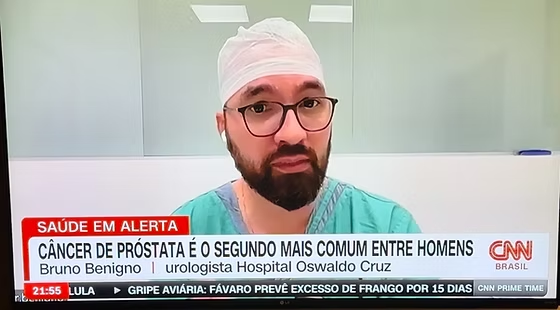
CNN interview cover - Dr. Bruno Benigno

CNN Brasil: Prevention and Advances Interview

Dr. Bruno discusses the importance of early diagnosis and the new frontiers of personalized medicine in oncology.
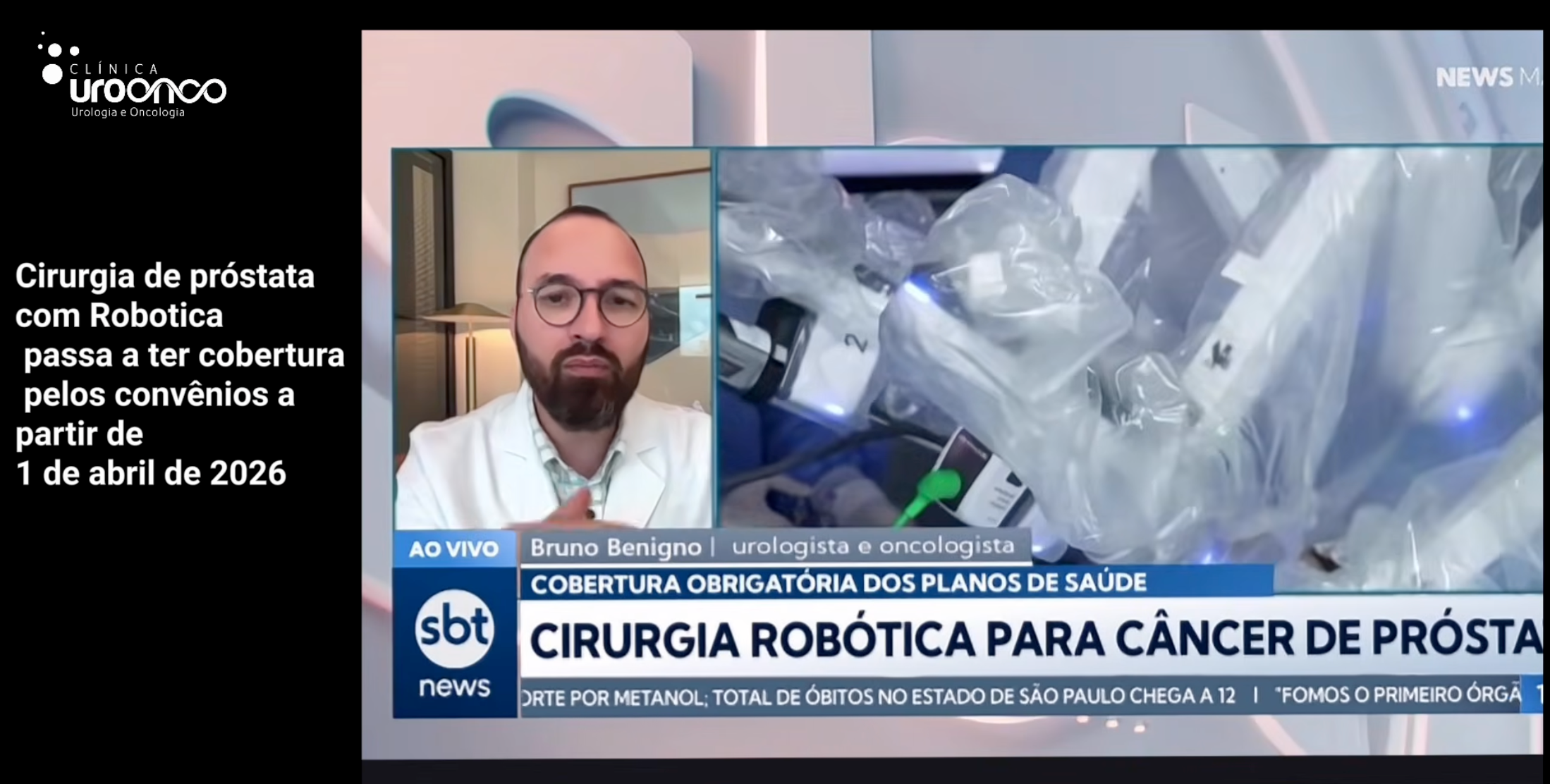
SBT interview cover - Dr. Bruno Benigno

SBT News: Coverage by Health Insurance Plans News

A technical explanation of the ANS decision that made robotic surgery mandatory coverage for all health insurance plans in Brazil.

Training, Experience
and Documented Results

An uncommon combination of high surgical volume, scientific publications and practice at the country's largest cancer centers.
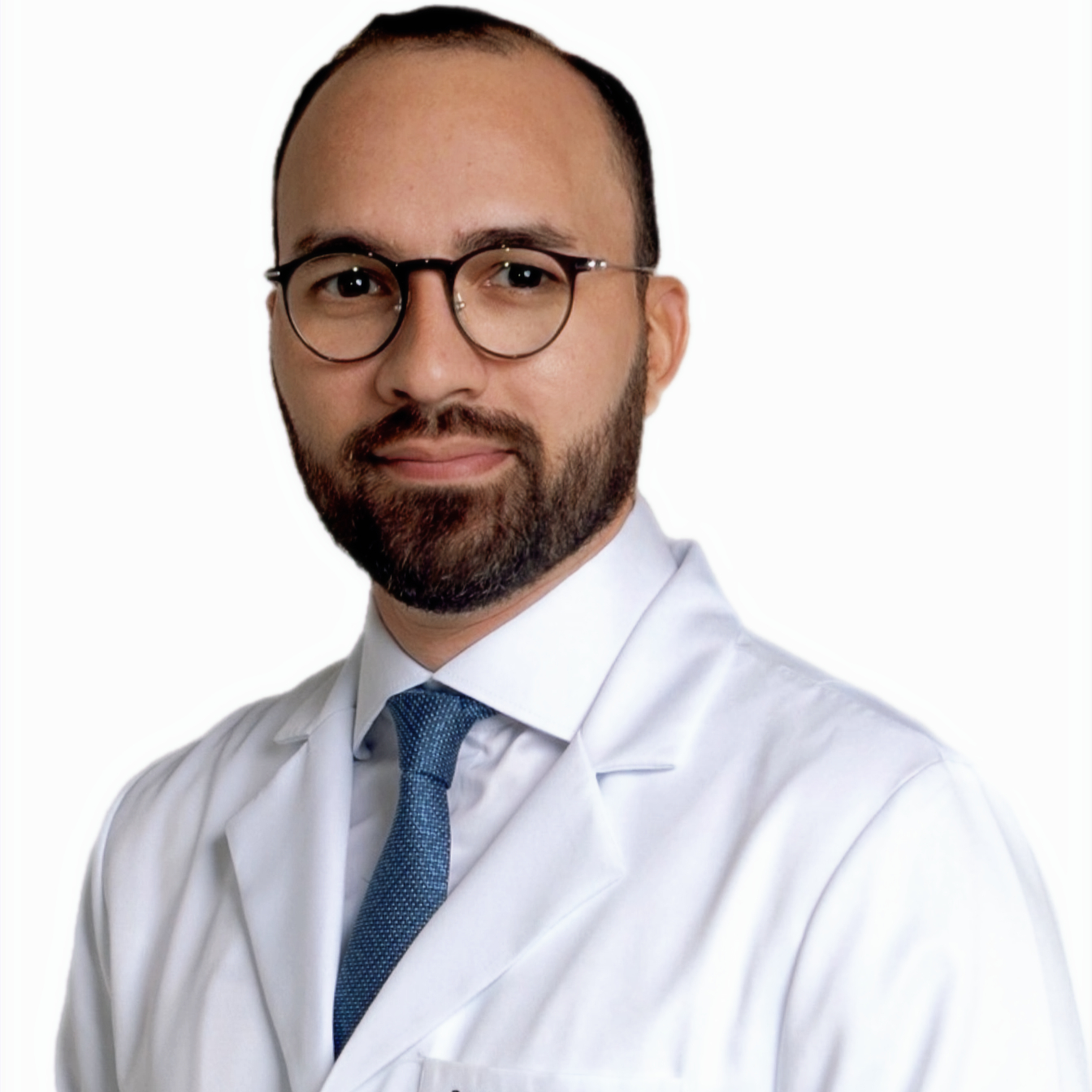
Dr. Bruno Benigno - Uro-oncologist
  • 1st place nationwide — Urology Board Certification (2013)
    Brazilian Society of Urology exam — top score in Brazil
  • Certified in Robotic Surgery since 2014
    13 years of continuous experience — more than 1,500 robotic procedures performed
  • Professor of Minimally Invasive Surgery
    A.C.Camargo Cancer Center, São Paulo (2013–2019)
  • Chapter in the SBU Urology Treatise 2026
    Benign kidney tumors — a nationally referenced scientific publication
  • Member of the American Urological Association (AUA)
    Ongoing education at the leading international urology congresses
  • 185,000+ YouTube subscribers (@EducaUroOnco)
    Brazil's largest uro-oncology education channel for patients

What a prostate cancer diagnosis
really means — and what to do

A diagnosis raises legitimate concerns about quality of life, potency and continence. Robotic surgery addresses exactly these concerns with millimetric precision.

What patients fear

  • Permanently losing sexual function
  • Having permanent urinary incontinence
  • A long hospital stay and painful recovery
  • Not knowing which treatment to choose
  • The cancer coming back after treatment
  • A permanent impact on quality of life

What robotic surgery offers

  • Preservation of the erectile nerves — nerve-sparing technique
  • Recovery of continence within 6 weeks in most cases
  • 1- to 2-day hospital stay — return to work in 2 to 3 weeks
  • Individualized treatment plan — EAU, AUA and NCCN guidelines
  • Negative surgical margins as a technical priority
  • Undetectable PSA as the objective goal of the procedure

Why robotic surgery
is today's gold standard

The Da Vinci system allows the surgeon to operate with 3D vision magnified 10×, motion scaling with millimetric precision and elimination of the natural tremor of the hands.

High-Definition 3D Vision

4K camera with up to 10× magnification — visualization of nerves and vessels that open surgery cannot identify.

10×

Millimetric Precision

Articulated instruments with 7 degrees of freedom, exceeding the human wrist. Dissection of the nerve bundles with minimal tissue trauma.

Minimal Bleeding

Transfusion rate of 0.4% versus 11% in open surgery. Incisions of 5 to 10 mm instead of a conventional 15 cm cut.

0,4%

Shorter Hospital Stay

Hospital discharge in 1 to 2 days. Urinary catheter for 7 to 10 days. Return to work 2 to 3 weeks after the procedure.

1–2 days

Nerve-Sparing Technique

Bilateral preservation of the neurovascular bundles responsible for erection — a technical goal in cases with an appropriate oncologic indication.

Covered by Health Insurance

Since April 2026, all health insurance plans regulated by ANS (Brazil's national health insurance regulator) are required to cover robotic prostatectomy — RN 654/2025.

From first contact
to full recovery

A structured protocol so you can make the right decision safely, well informed and without rushing.

1

Assessment Consultation

A complete analysis of your case: biopsy, staging, multiparametric MRI and PSA. Dr. Bruno presents all treatment options based on international guidelines — EAU, AUA and NCCN. Available in person or via telemedicine.

2

Individualized Surgical Planning

Every case is unique. The technique — bilateral or unilateral nerve-sparing, or no nerve preservation — is chosen according to tumor location, Gleason score, PSA and the patient's individual factors. A shared and documented decision.

3

Surgery at a Leading Hospital

Robotic radical prostatectomy performed at Hospital Alemão Oswaldo Cruz or Hospital Sírio-Libanês, with a complete team and excellent facilities. Average duration of 2 to 3 hours. Discharge in 1 to 2 days.

4

Postoperative Follow-up

Pelvic rehabilitation protocol, PSA monitoring with a trend curve and continuous support for recovery of continence and sexual function. Long-term follow-up with periodic in-person or remote consultations.

Digital Kit: 4 Free E-books for Your Journey

Get complete guidance for every stage of your treatment. We have prepared exclusive material for you and your family.

  • Complete preparation for surgery
  • Postoperative recovery manual
  • Guide to erectile and continence rehabilitation
  • Nutrition guide for the surgical patient

The 10 questions that keep
patients from booking

Straight answers to the most common questions about robotic prostate surgery.

Does my health insurance plan cover robotic surgery?
Yes. Since April 1, 2026, all health insurance plans regulated by ANS (Brazil's national health insurance regulator) are required to cover robotic radical prostatectomy (Normative Resolution 654/2025). To request it, the physician issues a report with the ICD code for prostate cancer and the TUSS code for robotic surgery. The plan has up to 30 days to authorize it. If it is denied, you can file a complaint on the ANS portal or by calling 0800 701 9656.
Will I become impotent after surgery?
It depends directly on the tumor's location and whether it is technically possible to preserve the erectile nerves. When there is an appropriate oncologic indication, bilateral nerve-sparing technique is performed. Recovery of erectile function is gradual — it can take from 6 months to 2 years and benefits from early penile rehabilitation with PDE5 inhibitors. Younger men with good preoperative function have a better prognosis.
Will I have permanent urinary incontinence?
Postoperative incontinence is expected at first but is temporary in the vast majority of cases. With modern robotic techniques, more than 90% of patients regain full continence within 12 months. Pelvic floor physiotherapy started before surgery significantly speeds up recovery.
How much does robotic surgery cost for self-pay patients?
The cost varies according to the hospital, operating time and complexity of the case — it includes surgical fees, anesthesia, use of the robotic system and hospital stay. For patients with a regulated health insurance plan, the surgery has been covered since April 2026. For self-pay patients, the cost is presented transparently at the assessment consultation.
What is the difference between robotic, open and laparoscopic surgery?
Open surgery requires a 15 cm incision, involves more bleeding (11% transfusion rate) and a 3- to 5-day hospital stay. Laparoscopic surgery is minimally invasive but uses 2D vision and rigid instruments that limit precision. Robotic surgery combines the best of both worlds: minimally invasive, with 10× 3D vision and articulated instruments — the same oncologic cure rate with lower surgical morbidity.
When should I have surgery? Is it possible to wait?
It depends on the oncologic risk. Low-risk cancer (Gleason 6, PSA below 10, localized disease) can be managed with active surveillance in selected cases. Intermediate or high risk requires active treatment. Dr. Bruno evaluates each case individually following the EAU and AUA guidelines — there is no one-size-fits-all answer.
How long do the surgery and hospital stay last?
Robotic radical prostatectomy takes on average 2 to 3 hours. The hospital stay is 1 to 2 days. The urinary catheter stays in for 7 to 10 days. Return to work in light activities occurs in 2 to 3 weeks. More strenuous physical activity is allowed after 6 weeks.
Can the cancer come back after surgery?
Biochemical recurrence — a detectable PSA after surgery — occurs in a minority of cases and depends on the initial stage and the surgical margins. Follow-up with PSA every three months in the first year and every six months thereafter allows early detection. When needed, salvage radiotherapy is highly effective when started early.
Does Clínica Uro Onco see patients from other states?
Yes. Clínica Uro Onco treats patients from all over Brazil. The first consultation can be done via telemedicine to review your tests and plan your case. Surgery is performed in São Paulo with a 1- to 2-day hospital stay. Postoperative follow-up can be partly conducted via teleconsultation.
Why choose Dr. Bruno Benigno?
Surgical volume: more than 1,500 robotic procedures with long-term follow-up. Training: 1st place nationwide in the SBU board certification (2013), robotic certification since 2014, fellowship in oncologic surgery, former professor at A.C.Camargo. Hospitals: practices at São Paulo's leading centers of excellence. Transparency: 185,000 YouTube followers with educational content — you can assess his clinical approach before booking.

Hospitals where he practices

Hospital Alemão Oswaldo Cruz
Hospital Sírio-Libanês
iURO
Hospital 9 de Julho
Vila Nova Star

Received a diagnosis?
Make the right decision with good information.

The first step is an assessment consultation. Dr. Bruno reviews your tests, presents all options and answers every question. Available in person or via telemedicine.

Rua Borges Lagoa, 1070, Conjunto 131, Cobertura — Vila Clementino, São Paulo/SP
clinicauroonco.com.br
Telemedicine available throughout Brazil

Where to find us

Clínica Uro Onco is located in the Vila Clementino medical district of São Paulo, easily reached from any part of the city and close to Ana Rosa metro station.

Address Rua Borges Lagoa, 1070, Conjunto 131, Cobertura
Vila Clementino — São Paulo — SP — 04038-002

Phone(11) 2769-3929
WhatsApp(11) 99590-1506
Office hoursMonday to Friday — 8 a.m. to 6 p.m.

Scientific references

The information on this page is based on the guidelines and studies below, published in peer-reviewed medical journals.

  1. Yaxley JW, Coughlin GD, Chambers SK, et al. Robot-assisted laparoscopic prostatectomy versus open radical retropubic prostatectomy: early outcomes from a randomised controlled phase 3 study. Lancet. 2016;388(10049):1057-1066. PubMed · DOI 10.1016/S0140-6736(16)30592-X

    Phase 3 randomized trial comparing robotic and open prostatectomy: similar urinary and sexual function at 12 weeks, with less bleeding and a shorter hospital stay with the robotic approach.

  2. Coughlin GD, Yaxley JW, Chambers SK, et al. Robot-assisted laparoscopic prostatectomy versus open radical retropubic prostatectomy: 24-month outcomes from a randomised controlled study. Lancet Oncol. 2018;19(8):1051-1060. PubMed · DOI 10.1016/S1470-2045(18)30357-7

    24-month follow-up of the same trial: similar functional and oncological outcomes between the techniques, underscoring the importance of the surgeon’s experience.

  3. Ilic D, Evans SM, Allan CA, et al. Laparoscopic and robotic-assisted versus open radical prostatectomy for the treatment of localised prostate cancer. Cochrane Database Syst Rev. 2017;9(9):CD009625. PubMed · DOI 10.1002/14651858.CD009625.pub2

    Cochrane systematic review: robotic and laparoscopic techniques were associated with fewer transfusions and a shorter hospital stay than open surgery.

  4. Ficarra V, Novara G, Rosen RC, et al. Systematic review and meta-analysis of studies reporting urinary continence recovery after robot-assisted radical prostatectomy. Eur Urol. 2012;62(3):405-417. PubMed · DOI 10.1016/j.eururo.2012.05.045

    Systematic review and meta-analysis on the recovery of urinary continence after robotic prostatectomy and the factors that influence it.

  5. Ficarra V, Novara G, Ahlering TE, et al. Systematic review and meta-analysis of studies reporting potency rates after robot-assisted radical prostatectomy. Eur Urol. 2012;62(3):418-430. PubMed · DOI 10.1016/j.eururo.2012.05.046

    Systematic review and meta-analysis on the recovery of erectile function after nerve-sparing robotic prostatectomy.

Medical content reviewed by Dr. Bruno Benigno, urologist and uro-oncologist (CRM-SP 126.265 · RQE 60022), based on AUA, EAU and NCCN guidelines. Last reviewed:

Book